There used to be two pianos upstairs in the Hardy Lane rooms. They've gone now and it must have required some effort to move them both upstairs and downstairs on the steep narrow stairs.
Here is a report of one of them being used. There might only have been one in the room at that time. It's Saturday 16th March 1946, just after WWII and rationing is still in operation. There was a pooling of goods collected from members and over 60 members and friends sat down to a "splendid tea and were serviced by the Committee".
Later "under the efficient direction of Mr.Dean, with Mrs.Horton at the piano, the dancing commenced."
Before then there was Mr. Best of the Guild Committee "performing clever conjuring tricks" which put "everyone in good spirits". After the tea and before the entertainment there were several speeches. Mr. Rutter, President does the cordial welcome and introductions. Mr.Dale of the Education Committee, Mrs. Ashton from the District Council, Mr.Hill of the Co-operative Party, Mr.S.Coombs of the Publicity Dept tendered congratulations and best wishes.
The evening continues with Miss Gilman demonstrating the art of elocution with some monologues "which received great applause". Refreshments and ices served during the interval, plus singing "Auld Land Syne" at the end of the evening.
Report, M&SE Co-op Herald Pg 91 April 1946.
Friday, August 21, 2009

Thursday, August 13, 2009
Trip to Archives
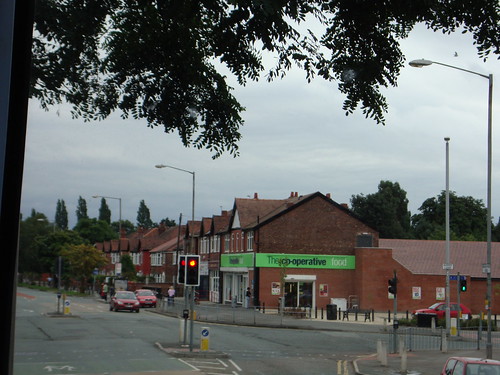
An afternoon looking at old archive material in Central Reference Library, Manchester. The good part was I found what I wanted in two hours. The bad part was it was a warm sunny day and the last place you want to be is indoors. There are so few great summer days you don't want to squinting over old handwriting and old typewritten reports.
What I did discover was the timetable for building the Hardy Lane store which was originally for two shops with flats above - not a co-op hall. Also the costs for construction and fitting out. The shops - grocer's and butchers were opened before all the work was complete because of competition being built nearby.
Now feel I can get the story written in booklet form which was the original intention.
Thursday, August 6, 2009
New Pitches
The Hardy Farm Playing fields haven't been used for years but they might get a new lease of life. They want levelling out first
West Didsbury & Chorlton FC have agreed to join with Oswald Road Junior FC to form a new Charter Standard Community Club to be based at Hardy Lane on the former playing fields adjoining their Brookburn Road ground.
Proposals for new junior and adult pitches with a full size 3g pitch and related changing facilities are being finalised and will be submitted to the City Council in the coming weeks. Interesting devlopements, might be ready for the 2010-11 season if all the approvals take place.
West Didsbury & Chorlton FC have agreed to join with Oswald Road Junior FC to form a new Charter Standard Community Club to be based at Hardy Lane on the former playing fields adjoining their Brookburn Road ground.
Proposals for new junior and adult pitches with a full size 3g pitch and related changing facilities are being finalised and will be submitted to the City Council in the coming weeks. Interesting devlopements, might be ready for the 2010-11 season if all the approvals take place.
Sunday, August 2, 2009
Gramophone Records
I recently was shown a box of old gramophone records, the 78rpm shellac variety that were allegedly played at the Hardy Lane Co-op Rooms in years gone by the Co-op Guild. Most are dance band records by people such as Jack Hyland, or Joe Loss. I made an inventory of the contents. However unable to play them as I've no player that does 78rpm speed so never checked their condition.
The M&SE Co-op used to hire out gramophones in the 1920's and 1930's to organisations that wished to use them for a social, and there were such gramophone concerts held in co-op halls. The most intriguing were a couple of discs by Billy Williams. He was a famous music hall artist who recorded cylinders and gramophone records - one of his most famous tunes was "When Father Papered The Parlour" which was still being played on BBC radio into the 1960's. The video on You Tube is "Old Grey Coat" which was one of the titles on my list. If you like such old tunes you should go to Archive.Org because they have lots of his material.
Wednesday, July 8, 2009
In the Archives
A hectic Wednesday but managed to make my appointment to look at the archived minute books of the M&SE Co-op Society. It is more an arrangement. They are in Central Reference library, Manchester but not held on site. So you have set a date when you want them available at the desk to peruse. Then it's handed over one item at a time.
Managed to find a few nuggets in between reading about the price of eggs, literally the monthly price of eggs in 1930 as the market was competitive with falling prices.
Found information about the stables at the back which cost £1,000 to build along with a yard. However not completed until after February 1930 after they had to complain to the builder to finish the work. By which time they had advertised internally for a charge-hand to run milk & egg deliveries. A weekly wage of 70/- (that's £3.50).
Now I know what they look like - ledgers with ink pen writing, and if you're very lucky typed sheets - I can find the answers to the questions. The problem with history is that answers only beget more questions.
Managed to find a few nuggets in between reading about the price of eggs, literally the monthly price of eggs in 1930 as the market was competitive with falling prices.
Found information about the stables at the back which cost £1,000 to build along with a yard. However not completed until after February 1930 after they had to complain to the builder to finish the work. By which time they had advertised internally for a charge-hand to run milk & egg deliveries. A weekly wage of 70/- (that's £3.50).
Now I know what they look like - ledgers with ink pen writing, and if you're very lucky typed sheets - I can find the answers to the questions. The problem with history is that answers only beget more questions.
Saturday, July 4, 2009
Hidden Stream
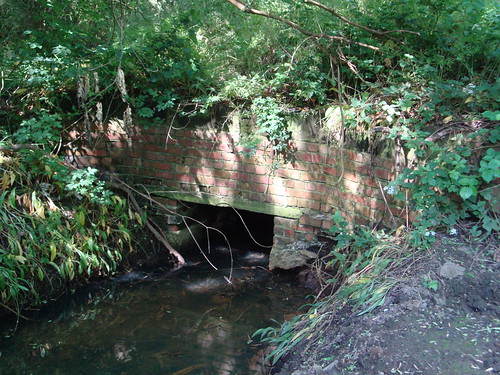
The other Friday, my old mate Andrew who does all this old history milarky like myself did some exploring on the Meadows and stumbled across it. It's even got a bridge over it with an overgrown path that leads to a fence surrounding the golf greens. Perhaps in the past it might have been used by farms carts. But you have to ask the question. Why cart all these bricks down here to build something that nobody now has a use for? It must have been of some significance at the time to cross the stream without getting wet wheels or feet.
After that we went to Cafe Ark at the Mersey Valley Visitors Centre for coffee and Eccles cake - photo. It's great when you live in the urban but you can dip into the countryside with just a short walk.
Tuesday, June 30, 2009
Co-op Candidates 1934
A first venture into local politics for the members of the Guild, Co-op Party and local Labour Party was in 1934.
"We are particularly proud of the fact that Barlow Moor Guild has put up a candidate for its own ward, and we have a whole-hearted enthusiasm amongst all the members of the Guild that should go a long way in attaining the result we are aiming for, that for the first time in municipal history the Didsbury Ward will be represented on the City Council by a democratic candidate, who is also of the M&S Co-op Party and a Guild worker."
Barlow Moor Guild Report in the Manchester & Salford Co-operative Herald October 1934
An optimistic outlook for an election contest in a safe Tory seat. There were two other candidates nominated by the Co-op Party - Mrs. Clara Bamber in Chorlton; and Mr. William Taylor (then Secretary of Withington Constituency Labour Party) in St. Luke's ward. A grant of £3 3s. (£3.15) was made to the Manchester Labour Party towards the expenses of a poster campaign. Also the Directors of the Co-op Society designated three cars to be placed at the disposal of the three candidates to be available from noon on polling day.
M&S Co-op Party Report in the Manchester & Salford Co-operative Herald December 1934.
Thursday 1st November 1934 - Manchester Municipal Elections
Didsbury ward
S.P.Dawson (C) 3027
W.Ingham (Lab) 1355
An unsuprising result against the sitting Conservative, Councillor Lt-Col S.P.Dawson MM who was first elected for Didsbury in 1928. As of yet I've been unable to find a picture of Mr.Ingham, his name crops up a number of times in Labour and Co-operative reports in this period.
The other results were :
Chorlton ward -
W.Somerville (C) 4,580
Clara Bamber (Lab) 1,664
St. Luke's
T.R.Ackroyd (L) 1873
W.Taylor (Lab) 1341
"We are particularly proud of the fact that Barlow Moor Guild has put up a candidate for its own ward, and we have a whole-hearted enthusiasm amongst all the members of the Guild that should go a long way in attaining the result we are aiming for, that for the first time in municipal history the Didsbury Ward will be represented on the City Council by a democratic candidate, who is also of the M&S Co-op Party and a Guild worker."
Barlow Moor Guild Report in the Manchester & Salford Co-operative Herald October 1934
An optimistic outlook for an election contest in a safe Tory seat. There were two other candidates nominated by the Co-op Party - Mrs. Clara Bamber in Chorlton; and Mr. William Taylor (then Secretary of Withington Constituency Labour Party) in St. Luke's ward. A grant of £3 3s. (£3.15) was made to the Manchester Labour Party towards the expenses of a poster campaign. Also the Directors of the Co-op Society designated three cars to be placed at the disposal of the three candidates to be available from noon on polling day.
M&S Co-op Party Report in the Manchester & Salford Co-operative Herald December 1934.
Thursday 1st November 1934 - Manchester Municipal Elections
Didsbury ward
S.P.Dawson (C) 3027
W.Ingham (Lab) 1355
An unsuprising result against the sitting Conservative, Councillor Lt-Col S.P.Dawson MM who was first elected for Didsbury in 1928. As of yet I've been unable to find a picture of Mr.Ingham, his name crops up a number of times in Labour and Co-operative reports in this period.
The other results were :
Chorlton ward -
W.Somerville (C) 4,580
Clara Bamber (Lab) 1,664
St. Luke's
T.R.Ackroyd (L) 1873
W.Taylor (Lab) 1341
Monday, June 29, 2009
Hardy Lane 100 years ago
 Taken from Slater's Street Directory of Manchester & Salford published 1909. As you will observe - no house numbers, two farmers (Hardy Farm with James Brundrett, and Hardy House Farm with James Richardson), a pub (that's at Jackson's Boat). A cricket club founded in 1885 - the ground is still there but the cricket stopped a few years ago. Chorlton Golf Club carries on but the club house moved down the road to Barlow Hall at sometime in the 20th Century. Everybody else resides in a a block of cottages called Hardy Cottages or The Block House.
Subscribe to:
Posts (Atom)